
Learn what interprofessional education is and why it matters for future nurses. This summary explains how Marquette DE-MSN students build collaborative practice, communication and teamwork skills through case-based learning, clinical preparation, IPED seminars and simulation experiences grounded in nationally recognized IPEC competencies.
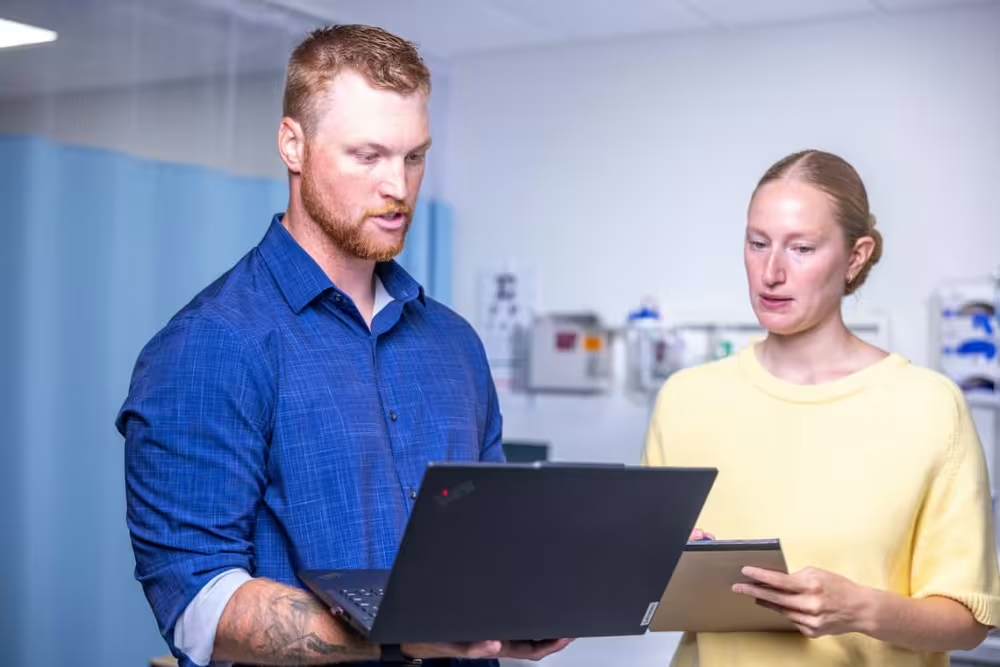
Nurses rarely work alone. They coordinate with other professionals to understand patient needs, plan care and respond when conditions change, so learning how to work across professions and disciplines is an important aspect of nursing education.
Interprofessional education (IPE) is a structured approach in which students from two or more professions learn about, from, and with one another. Marquette University’s Second Degree Direct Entry Master of Science in Nursing (DE-MSN) program prepares future nurses to collaborate effectively and improve health outcomes.
Through interprofessional education like what Marquette offers, students develop the habits needed to communicate clearly, coordinate care and respect each team member’s expertise.
The Role of Interprofessional Education in Modern Health Care
Modern health care brings together professionals with distinct knowledge and responsibilities. A single patient may need support from a nurse, occupational therapist, physical therapist, physician and a speech-language pathologist. Each professional contributes a different perspective, yet the team must still work toward shared goals.
The Interprofessional Education Collaborative, known as IPEC, provides a national framework for this preparation. IPEC’s Core Competencies for Interprofessional Collaborative Practice, published in 2023, places interprofessional collaboration at the center of four areas:
- Communication
- Roles and Responsibilities
- Teams and Teamwork
- Values and Ethics
Marquette follows these competencies through our Interprofessional Education program, which we refer to as IPED.
An IPE nursing experience does not ask students to perform another profession’s job; it helps future nurses understand when to consult a colleague, escalate a concern and share relevant information. That awareness can support more coordinated care and better outcomes.
Why Interprofessional Education Matters in Nursing
Nurses are crucial in connecting and coordinating care between patients, families and the patient care team. They assess changes, carry out care plans and communicate across shifts. Prospective students researching interprofessional education in nursing should look for experiences that show how these responsibilities fit within a larger system.
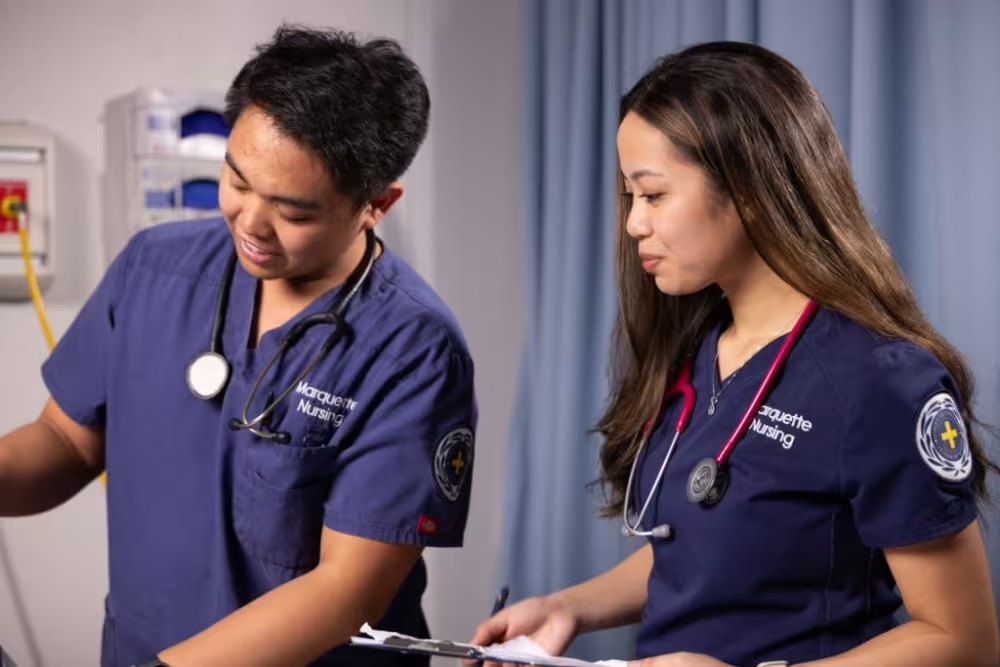
Builds Communication and Teamwork Skills
Nursing students benefit from practicing active listening, clear handoffs, constructive feedback and respectful discussion before they enter professional practice. These skills can help them explain nursing observations efficiently to other health care professionals.
Team exercises also show where communication can break down. A missed detail, an unclear role or an unspoken concern can affect care. Guided discussion lets students consider a better response.
Prepares Students for Interprofessional Collaboration
IPE in nursing helps students understand the expertise, limits and priorities of other professions. This knowledge can make it easier to identify the right team member when a patient has a need beyond the nurse’s scope of practice.
Supports Patient-Centered Care
Patient-centered care keeps a patient’s concerns, goals and preferences at the center of decision-making. A collaborative interprofessional team can consider more dimensions of a person’s health than one professional alone.
Nurses often observe how a plan affects the patient over time. They can advocate for the patient’s priorities and connect information from different team members. At Marquette, this approach reflects cura personalis, the Jesuit commitment to care for the whole person.
What Does Interprofessional Education Look Like in Nursing School?
Marquette’s Direct Entry MSN program prepares students with a non-nursing bachelor’s degree to pursue RN licensure. Students complete the curriculum in five or eight semesters, depending on enrollment location. They work through coursework, nursing skills and simulation labs, and clinical rotations at top area health care facilities. IPED learning adds structured opportunities to work with students across other areas of study.
Classroom Learning
Marquette Direct Entry MSN students complete IPED sessions focused on Communication, Roles and Responsibilities, Teams and Teamwork and Values and Ethics. These areas align with the current IPEC framework and give students a shared language for discussing collaborative practice.
Before a seminar, students complete assigned pre-work. During the seminar, they join other health professions students for guided activities and discussion. Afterward, each student submits a final reflection. This structure helps students arrive ready to engage. It also gives learners time to think about how the experience applies to future practice.
Simulation Experiences
Marquette’s nursing simulation labs place small groups of students in realistic patient care scenarios with faculty guidance. Students prepare for the scenario before taking part. They then complete a debriefing and performance review.
Simulation can reinforce IPED concepts by asking students to communicate a change, organize priorities and respond to feedback. Even when a simulation centers on nursing practice, the scenario can help students consider what information another professional would need and when the nurse should involve that person.
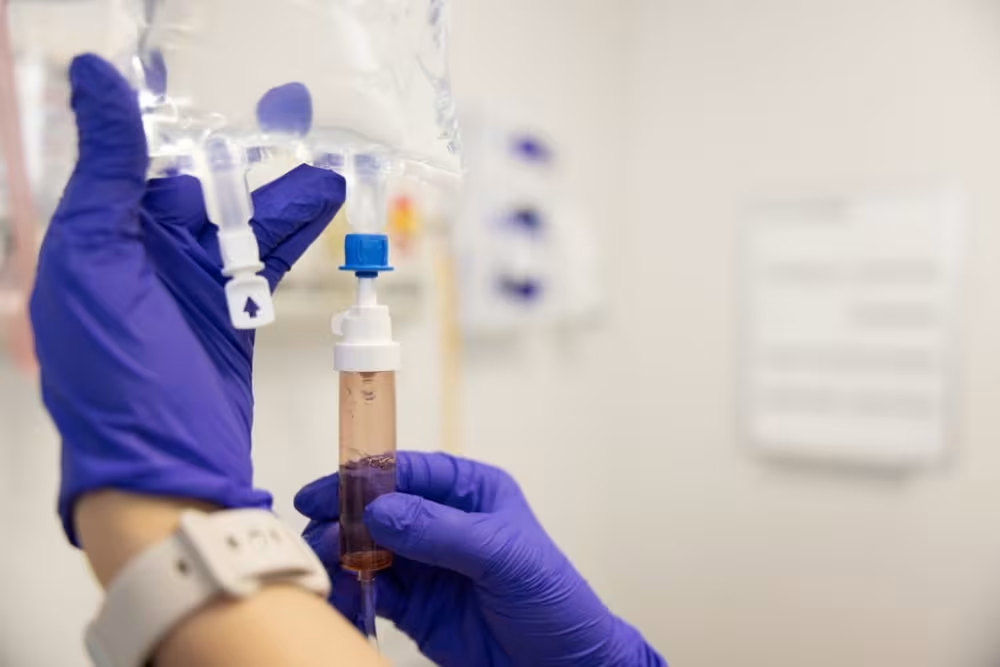
Learn more about simulation in nursing school and how it helps you develop clinical skills.
Case-Based Learning
IPED seminars use activities and case studies to make collaboration concrete. A team may review the same patient situation from several professional viewpoints. A nursing student may notice assessment concerns, while another student identifies a need related to mobility, oral health or difficulty swallowing.
Working through a case helps students explain their reasoning instead of simply stating an answer. It also shows why a care plan may become stronger when different areas of expertise are included. The final reflection allows each learner to identify assumptions, communication choices and lessons to carry forward.
Clinical Placements
Direct Entry MSN clinical rotations place students in health care settings where complex teams are part of daily practice. Under supervision, students can observe how nurses communicate changes, follow organizational protocols and participate in coordinated care.
A clinical placement is not an IPED seminar with students from several programs, but it enables students to apply interprofessional learning by observing the dynamics of shared decisions, professional roles and team communication.
What Is Interprofessional Collaboration?
What is interprofessional collaboration? How does it differ from IPE? Interprofessional education is the learning process, while collaboration is the practice of professionals from different backgrounds working with people involved in care, including patients, to improve outcomes.
Interprofessional collaboration in nursing may include clarifying discharge instructions, escalating a concern about symptoms or updating a care plan. Effective collaboration does not remove professional boundaries or require the team to make every decision. Instead, it helps the right expertise influence the patient care plan.
Who Participates in Interprofessional Education?
Marquette’s IPED experiences bring together students from dentistry, nursing, occupational therapy, physical therapy, physician assistant studies and speech-language pathology. Participants learn with peers they may later encounter in professional practice.
Each field offers a distinct view of patient needs. Nursing brings care coordination and continuous assessment. Dentistry contributes expertise in oral health. Occupational therapy addresses participation in daily activities. Physical therapy focuses on function and mobility. Physician assistant students contribute medical assessment and treatment perspectives. Speech-language pathology addresses communication.
Learning together can correct assumptions about who handles what. It can also help students recognize areas where responsibilities overlap and communication becomes especially important.

See how networking in nursing across practice areas and different disciplines can help advance your career.
Benefits of Interprofessional Education for Nursing Students
Repeated opportunities to learn, practice and reflect can influence how a nursing student approaches professional practice as an RN. IPE can be hugely beneficial when beginning a career.
Greater Clinical Confidence
Clinical confidence means having nursing knowledge, as well as knowing how to contribute and when to seek support. Through IPED activities, students can practice asking focused questions, explaining observations and introducing their role. Reflection then helps them identify what to strengthen before a similar situation occurs in practice.
Stronger Leadership and Decision-Making Skills
Nursing leadership often begins before a nurse holds a formal title. A nurse may lead by advocating for a patient, clarifying the plan or welcoming a colleague’s expertise. The IPEC framework reinforces conflict management, shared leadership and team reasoning. Case discussions during or after IPE seminars give students a lower-risk setting in which to explain a decision after weighing the options.
Practice-Ready Preparation
Interprofessional education supports practice readiness by connecting clinical judgment, communication and teamwork. When combined with clinical rotations, coursework and simulation, it can help students enter practice with a more realistic understanding of team-based care.
How Marquette University’s Direct Entry MSN Integrates Interprofessional Education
Marquette began developing interprofessional learning in 2014. We offered our first large collaborative workshop in 2017, then built a four-part series around the IPEC competencies. Dedicated IPE programming reaches about 1,500 participants from multiple programs each semester on a dedicated “IPE Day.”
For Direct Entry MSN students, IPED makes collaboration a planned part of nursing education. Students prepare before class and work with an interprofessional group during the session. A reflection follows. Students can then connect those lessons to case studies, clinical experiences and nursing simulations.

Prepare for Collaborative Nursing Practice at Marquette University
Career changers often bring experience in communication, leadership or problem-solving from another field. Marquette’s Direct Entry MSN program helps students apply those strengths while developing nursing knowledge from the beginning. Interprofessional learning provides experiences working with future colleagues and reaching the best patient outcomes possible.
If Marquette’s Direct Entry MSN fits your goals, request information and connect with an admissions adviser today.