
Health promotion in nursing focuses on prevention, patient education, and long-term wellness. Nurses play a central role in reducing risk, managing chronic conditions, and guiding healthier behaviors. Through education and support, they improve patient outcomes and improve community health across care settings.

Nursing often involves treating illnesses after they appear, but nursing is also about helping people to stay well, lower their risk and build habits that support long-term health. This makes health promotion in nursing central to modern health care.
Across care settings, including hospitals, clinics, schools and communities, nurses coordinate with other health care professionals and guide patients through screenings, chronic disease management and everyday wellness decisions. Because nurses often spend more time with patients than other health care professionals, they can educate patients and advocate for measures to improve health outcomes.
Marquette University’s Second-Degree Direct Entry Master of Science in Nursing program teaches students to deliver care according to a holistic model. By addressing the root causes of illness along with symptoms, nurses can make a significant impact on patient wellness through health promotion. Discover more about health promotion and its place in the modern nursing field.
What Is Health Promotion in Nursing?
Health promotion means helping people improve their health and gain more control over the factors that shape it. The American Public Health Association defines public health nursing as “the practice of promoting and protecting the health of populations using knowledge from nursing, social and public health sciences.” Key factors in health promotion include prevention, education, support for behavior change and efforts to create healthier communities.
In nursing practice, health promotion means educating patients to help reduce risk factors, prevent illness, manage existing conditions and make informed choices. Physical health matters, but mental health, emotional well-being, social support, culture, environment and access to care can also greatly affect outcomes.
Why Is Health Promotion Important in Nursing?
The importance of health promotion in nursing is clear at both the patient and community levels. Many serious conditions are linked to modifiable risk factors and social determinants of health, such as poor nutrition, low physical activity levels, tobacco use, chronic stress and missed preventive care.
Nurses are essential to patient care, and they can provide practical action items to address these health risks in daily life. As referenced in the National Academy of Medicine’s report, The Future of Nursing 2020-2030, nurses can work to:
- Engage patients with chronic conditions in behavior change and adjust medications according to practitioner-written protocols.
- Lead teams to improve the care and reduce the costs of high-need, high-cost patients.
- Coordinate the care of chronically ill patients between the primary care home and the surrounding health care neighborhood.
- Promote population health, including working with communities to create healthier spaces for people to live, work, learn and play.
Health promotion supports early action, upstream of the underlying causes of health outcomes. When patients stay current on screenings and vaccines, understand warning signs and follow care plans, problems are more likely to be addressed before they become serious.

Discover the philosophy of professional nursing practice, including the importance of patient communication.
Health Promotion and Disease Prevention in Nursing
Health promotion and disease prevention are closely linked, but they are not identical. Health promotion in nursing focuses on overall wellness and healthier living. It overlaps with disease prevention, but disease prevention is more directly focused on lowering the risk of illness, detecting problems early and limiting complications after diagnosis.
Nurses support both health promotion and disease prevention through three levels of prevention.
- Primary prevention aims to stop illness before it starts through lifestyle habits, such as balanced eating, regular movement, vaccines, tobacco cessation and safe practices.
- Secondary prevention focuses on early detection through measures like blood pressure checks, cancer screenings, mental health screenings and other routine assessments.
- Tertiary prevention helps patients manage an existing diagnosis through medication adherence, symptom monitoring, follow-up care and self-management skills.
Together, these efforts show how health promotion and disease prevention shape nursing across settings and populations.
Patient Education in Nursing and Health Promotion
Patient education in nursing is a powerful tool for promoting public health. When patients understand their conditions, treatments, and risk factors, they are better prepared to make informed decisions and care for themselves effectively.
Patient education can improve how closely someone adheres to their treatment plan while raising their confidence in managing their health. A patient who understands why a medication matters, what symptoms to watch for, or when to schedule screenings is more likely to follow through with care.
Nurses counsel patients on nutrition, exercise, medication use, vaccinations, symptom monitoring, follow-up care, and warning signs that require medical attention. As a practicing nurse, you can adjust your methods for patient education based on age, culture, language, emotional state, health literacy and learning preferences. By asking patients to explain instructions in their own words or demonstrate a skill, you can ensure they understand important information about their health.
Examples of Health Promotion in Nursing Practice
A real-world example of health promotion in nursing could involve educating a patient on diabetes management. A nurse may explain how meals affect blood sugar, how to check glucose levels, how to take medications correctly, and how to reduce the risk of complications through foot care and regular follow-up.
Nurses may also review overdue screenings during routine health care visits. Even if the patient comes in for a different concern, the nurse may identify the need for a blood pressure check, cholesterol test, mammogram or colon cancer screening.
Discharge planning also plays a major role in health promotion. A patient leaving the hospital with heart failure may need instruction on medication use, sodium limits and symptoms that should be reported quickly. This form of patient education in nursing supports safer recovery and better long-term management.
Health promotion is not restricted to one-on-one patient care. In community settings, nurses may lead blood pressure screenings, prenatal classes, school health programs, vaccine events, or wellness education sessions.
Learn more about what a nurse practitioner does in day-to-day care delivery.

How MSN-Prepared Nurses Lead Health Promotion and Public Health Efforts
MSN-prepared nurses can help address health promotion in nursing at a broader level. While most nursing practice areas involve working with patients to support prevention and wellness, nurses with advanced degrees, such as MSNs, may be more involved in leadership, systems improvement and broader strategies for population health. They may work as nurse practitioners, clinical nurse specialists, nurse leaders or public health professionals.
For example, an MSN-prepared nurse may lead a chronic disease initiative designed to reduce readmissions. Another may improve patient education in nursing across a health care system by creating stronger teaching tools or discharge processes. A nurse leader may analyze quality data and identify care gaps related to vaccines, preventive screenings, or chronic disease follow-up.
MSN-prepared nurses can also support public health efforts by leading outreach programs, addressing community health needs, or advocating for policies that improve access to primary and preventive care. As the National Academy of Medicine references elsewhere in its Future of Nursing report, screening for social needs and making referrals to social services has become increasingly commonplace in clinical settings as part of efforts to provide holistic care.
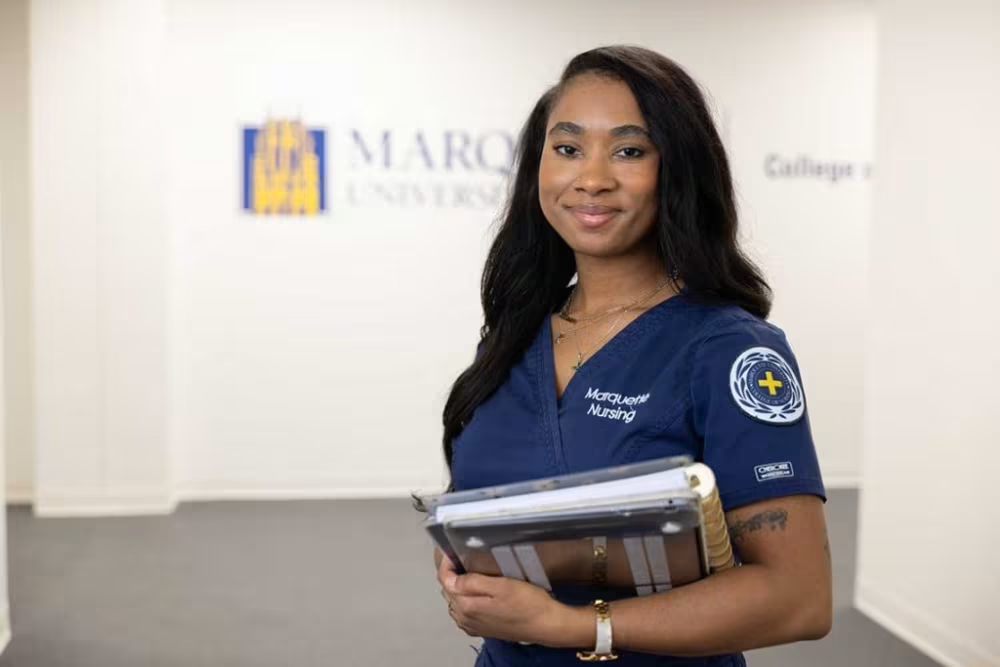
As a student in a Direct Entry MSN program like Marquette’s, your time spent with patients during clinical rotations will help you build experience in delivering holistic care throughout your career.
Prepare for a Rewarding Nursing Future with Marquette
Nurses teach, advocate, assess and support patients across every stage of care. Through strong patient education, nurses help people understand how to better protect their health and make informed choices. Whether the focus is vaccination, screening, disease management or lifestyle changes, health promotion and disease prevention remain central to nursing practice.
If you want to make an impact in your career, nursing can be one of the most rewarding pathways to follow. Request information today and take the next step toward a nursing career.